
Capital of the state of Yucatan, the historic city of Merida (MAY-ree-dah) makes an excellent base for exploring the Yucatan’s awesome Mayan treasures, eco tourism sites, and is also a fascinating colonial city destination in its own right. Merida lies only 30 kilometers (18 miles) from the western Yucatan gulf coast and the beach resort of Progreso.
This is one of Mexico’s most hospitable and nostalgic colonial cities, even with a population of around over 1 million. Similar to the city of Oaxaca, Merida combines colonial-era architecture with a rich Indian heritage. Attractions center around the city’s lovely zocalo, bordered by graceful buildings and shade trees. Many of the city’s older buildings, dating back to the 17th and 18th century, have white and pastel exteriors. The city has been called the “White City” because of this fact.
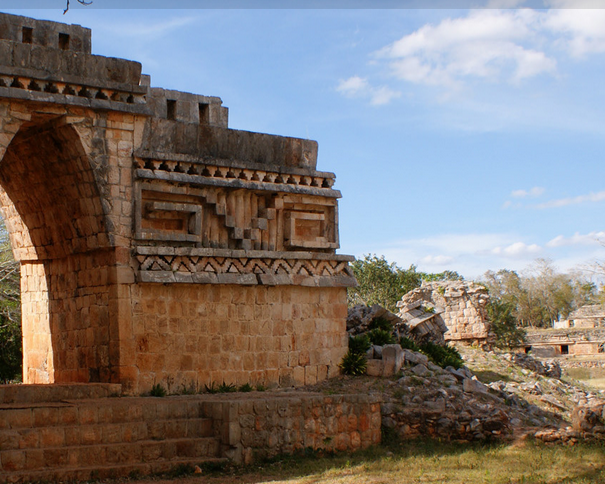
Numerous museums and markets bring alive the area’s fascinating Mayan culture, while surrounding the city are some of the world’s most important ancient archaeological sites. The cities of Chichen Itza, Uxmal, Sayil, Kabah, Labna, and Edzna are within a 160 km. (96 miles) radius of Merida.
Historically, Merida stands alone for it’s unique variation of tropical colonialism. Like many other colonial cities, Merida was founded on the exact site of an existing indigenous ceremonial center. In colonial times it was a frontier outpost and commercial center.
Surviving a bloody rebellion by Maya descendants in the 1840’s, Merida began a period of prosperity in the late 1880’s as they were the world’s leader in exporting henequén (used to make rope). That guided the city’s development more toward Europe than Mexico due to the lack of rail and road links to the rest of Mexico.
This combination of wealth and a flirtation with 19th century European culture launched a period when Merida was considered the “Paris of the West“. You can still see the architecture and city layout with several grand mansions and palaces which line the elegant Paseo Montejo, a tropical Champs Elysées on the city’s outskirts.
Merida’s visitor attractions include historic sightseeing, gateway to the Mayan world, excellent shopping (Mayan art, hammocks, unique native crafts) and a leisurely tropical pace. Lodging ranges from colonial bed & breakfast inns to modern high rise hotels.
Merida is also an important access point for an ambitious multi-national promotional effort known as Mundo Maya, or Mayan World. This effort aims at unifying the tourism development, protection, and promotion of a region rich in Mayan archeology, ecotourism opportunities, and cultural diversity. Four countries, Belize, Honduras, El Salvador, and Guatemala, have joined Mexico in this unprecedented effort.
By Air
Merida has an international airport. Flights arrive at Miguel Cresencio Rejón International Airport (MID) daily. The airport is 6 miles (12 kms.) southwest of the city. The airport is modern and has several shops, restaurants, bars, and rental car agencies.
By Land
Merida can be reached by driving from Cancun (4-5 hours) on a toll road which becomes Hwy. 180. You can also take the free road from Cancun which will add some hours onto your trip. Coming from the south from Campeche on the other extension of Hwy. 180 (free road), the drive is around two hours and it is a well-maintained road.
The first and second class bus terminals can be found 4-5 blocks southwest of the Zocalo in the vicinity of Calle 70 and Calle 69. Most bus companies head out to many cities in the Yucatan and Mexico. If you are interested in visiting Progreso, there is a specific station for the AutoProgreso bus line at Calle 62 x 65 y 67. Their buses leave every 12-14 minutes for the 20 minute trip to the coast.

ACCOMMODATIONS
ACTIVITIES & TOURS

CLASSES & SCHOOLS
RESTAURANTS & BARS
REAL ESTATE
BEAUTY & HEALTH