
Mazatlán (Mah-Saht-LAHN) means the “place of the deer“. It is also called the Pearl of the Pacific. It is a destination with a split personality. Despite the importance of its visitor industry, Mazatlan remains very much its own city. It nicely balances its double identity as Mexico’s largest commercial port while being one of the country’s most popular beach resorts.
Mazatlan is Mexico’s second largest coastal city (after Acapulco), with nearly 500,000 inhabitants. It has the largest port facility between Los Angeles and the Panama Canal, and is home to Latin America’s biggest fleet of commercial shrimp vessels (over 800 boats). Nearly 40 tons of shrimp are processed each year, making Mazatlan “the shrimp capital of the world“.
Mazatlan has many events and festivities during the year. Carnaval, usually in February, brings the cities colorful lifestyle to the forefront as thousands of costumed celebrants throng the resort’s streets & beaches making Mazatlan’s mardi gras the third largest in the world. Fishing and other sporting tournaments, as well as cultural events and various Mexican holidays fill out the year.
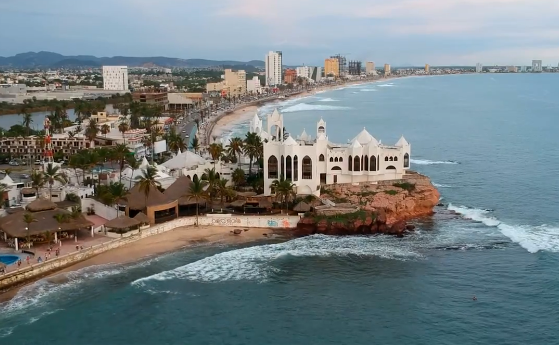
Mazatlan has three distinct zones. The port and downtown area, Old Mazatlan, is at the southern end of a peninsula that separates the Pacific from an enormous saltwater estuary. To the north some four miles is the Zona Dorada (the golden zone), home to many of Mazatlan’s visitor attractions and beach hotels. Between the two is a long curved stretch of beach with the world’s longest malecon (seaside walk) of roughly 13 miles. It serves as a sort of buffer between the port and resort zone. This separation allows the resort community to co-exist nicely with one of Mexico’s busiest commercial ports.
Since the 1950’s Mazatlan has been a major cog in Mexico’s visitor industry. Cancun and Ixtapa were deserted sandbars when Mazatlan began earning a reputation for affordable and friendly fun-in-the-sun. The resort grew up hosting weary American motorists who found it a welcome oasis on their journey south. As air service improved, the resort became a mainstay of Mexico’s burgeoning tourism industry. In fact, Mazatlan has probably introduced more Americans and Canadians to Mexico than any other resort.
One of the best things going for Mazatlan is its combination of affordable comfort and laid-back seaside charm. Its long, wide sandy beaches with rolling surf (quite similar to the beaches of Southern California) are lined with fun, open-air bistros and bars. While there’s plenty of elbowroom, the sunny beaches clamor with activity. Strolling vendors hawk their wares, para-sails float upward, and sunbathers of all ages frolic in the blue Pacific.
Mazatlan has some unique attractions and must-dos such as a ride on a pulmonía (open-air taxis) especially along the malecon; take a hike (and you can zipline down if you choose) to the second-highest lighthouse in the world, Mazatlán’s Lighthouse sits atop Crestón Hill, 515 feet above sea level; visit “Gran Acuario Mar de Cortés“, considered the largest aquarium in Latin America; check out the 1875 cathedral and it’s organ, Basilica de La Inmaculada Concepcion (Mazatlán’s crown jewel); take in a performance at Ángela Peralta Theater which opened its doors in 1874. Or if you want to get off the beach and leave Mazatlan, you can visit the historic towns of Concordia and El Rosario or the petroglyphs at Las Labradas;
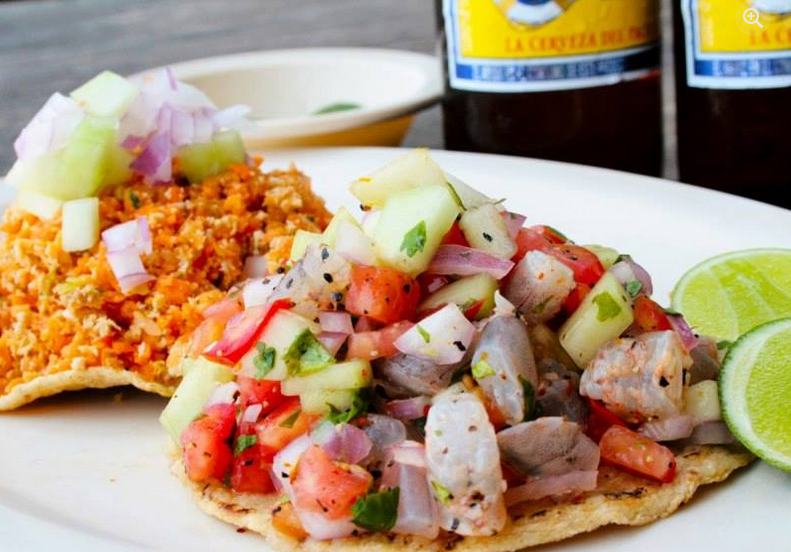
Dining (especially for seafood) and nightlife are excellent. Shopping is also first rate, with several fine art galleries and handicraft markets. Sightseeing combines a few colonial era sites with more contemporary attractions. For the sports enthusiast, Mazatlan offers the usual assortment of watersports along with some of the world’s finest deep sea fishing. Surfing is excellent as is hunting for waterfowl.
Many properties date to the 1960’s and 70’s but recent construction has seen a number of first class resorts being opened. Old Mazatlan offer some old-style and unique accommodations away from the beach. While not as glitzy as its cousins to the south, Mazatlan is one of the few resorts in Mexico that offers ultramodern deluxe resorts alongside budget beachfront hotels.
Despite losing some of its popularity, Mazatlan remains a favorite of many West Coast vacationers. While the new kids on the block (Los Cabos, Ixtapa, Cancun) lure visitors with dazzling mega-resorts and the latest in leisure time gadgetry, Mazatlan has stuck to its roots: sun, sea and service.
By Air
Mazatlan has an international airport. Flights arrive at Rafael Buelna International Airport (MAZ) daily. The airport is 14 miles southeast of the hotel and resort area. The terminal has recently undergone an expansion and improvement project. Several shops are open, plus a restaurant, bar, and several rental car agencies.
By Land
Mazatlan can be reached by driving the toll road (Hwy. 15) from Nogales. You can also take the free road which will add some hours onto your trip. Coming from the east through Durango is another option on Hwy. 40, but remember you are crossing the Sierra Madre Occidental and you’ll need to be cautious and drive slow in some areas.
Central de Autobuses can be found just east of Playa Norte on Calle Rio Chachalacas. Most major bus companies serve the resort and head out to many cities in Mexico. First class from the U.S. border (Nogales, AZ) to Mazatlan takes between 17-18 hours.
The Mazatlan Train Station is located on the eastern edge of town in Colonia Emiliano Zapata. At this time, the train is not running passenger service, but it used to serve Mexicali and Nogales to the north and Guadalajara to the south, as well as points in between.
By Sea
Mazatlan has the biggest marina grouping in all of Mexico and is vary popular with the yachting set or the casual boater. Marina Mazatlan is the larger of the two main marina’s in the resort with over 1,200 slips. All amenities are offered from boat yard and fuel dock to a golf course, plus 24 hr. security, and yacht club. Marina El Cid offers a little over 100 slips and also features a fuel dock, security, accommodations and a beach club. You’ll also find the Capitan of the Port offices here for check-in, which is required by the Mexican government.
The Mazatlan Ferry operated by Baja Ferries, can provide vehicle and passenger transport to and from La Paz in Baja California Sur. The trip takes 12-14 hours and advance tickets can be purchased during the week. The actual ferry boards at end of Av. Carnaval from the Muelle Transbordador at the harbor and you can also purchase tickets here.
ACCOMMODATIONS

ACTIVITIES & TOURS
RESTAURANTS & BARS
REAL ESTATE
BEAUTY & HEALTH